```
Enshi Travel Guide
Hidden away in the mountainous southwestern corner of Hubei Province, Enshi Tujia and Miao Autonomous Prefecture offers travelers a rare glimpse into China's dramatic karst landscapes and vibrant ethnic cultures. Far from the tourist crowds that flock to China's eastern cities, this region rewards adventurous visitors with world-class canyon views, ancient cave systems, and the warm hospitality of the Tujia and Miao peoples.
FAQ
What is Enshi best known for?
Enshi is renowned for its spectacular karst topography, highlighted by the Enshi Grand Canyon—one of China's most impressive canyon landscapes. The region is also famous for its Tujia and Miao ethnic heritage, distinctive cuisine, and the rare "Yunwu" tea that grows in its misty mountains.
How many days do I need in Enshi?
A minimum of 3-4 days is recommended to explore the major attractions. The grand canyon alone warrants a full day, while the cave systems and cultural sites require additional time.
Is Enshi suitable for families?
Yes, though some attractions involve significant walking and climbing. The Tujia Daughter City and Tenglong Cave are family-friendly, while the grand canyon's steep sections may be challenging for young children or elderly travelers.
What language is spoken in Enshi?
Mandarin Chinese is widely understood, but many Tujia and Miao residents speak their native dialects. English signage is limited outside major hotels.
Do I need a visa?
Enshi is in mainland China, so standard tourist visa requirements apply for international visitors.
Overview
Located approximately 500 kilometers west of Wuhan, the capital of Hubei Province, Enshi occupies a strategic position where the Yunnan-Guizhou Plateau meets the middle reaches of the Yangtze River. The prefecture encompasses 21,000 square kilometers of mountainous terrain, deep valleys, and limestone formations that have been sculpted over millions of years.
The region's geological diversity creates a landscape of extraordinary beauty—towering karst peaks, underground rivers, natural bridges, and waterfalls that plunge into misty canyons. This natural splendor is matched by cultural richness: the Tujia and Miao peoples have inhabited these mountains for centuries, preserving unique traditions in architecture, dance, music, and cuisine.
Enshi's tourism infrastructure has developed significantly in recent years, with improved roads, new high-speed rail connections, and a regional airport making this once-remote destination increasingly accessible. Yet the region retains its off-the-beaten-path character, offering authentic experiences that remain largely undiscovered by international travelers.
Top Attractions
| Attraction | Type | Highlights | Recommended Visit Time |
|---|---|---|---|
| Enshi Grand Canyon | Natural Wonder | Qixing Pass, Yunlong Ridge, cable car rides, cliff-edge walkway | Full day |
| Tenglong Cave | Geological | China's largest karst cave system, underground river, illuminated formations | 3-4 hours |
| Fairy Mountain (Fengman Mountain) | Scenic Mountain | Cloud seas, peak views, ancient temples, hiking trails | Half day |
| Tujia Daughter City | Cultural | Ethnic performances, traditional crafts, Tujia architecture, night shows | 3-4 hours |
| Piao Valley | Natural Landscape | Colorful rock formations, terraced fields, photography opportunities | Half day |
Enshi Grand Canyon
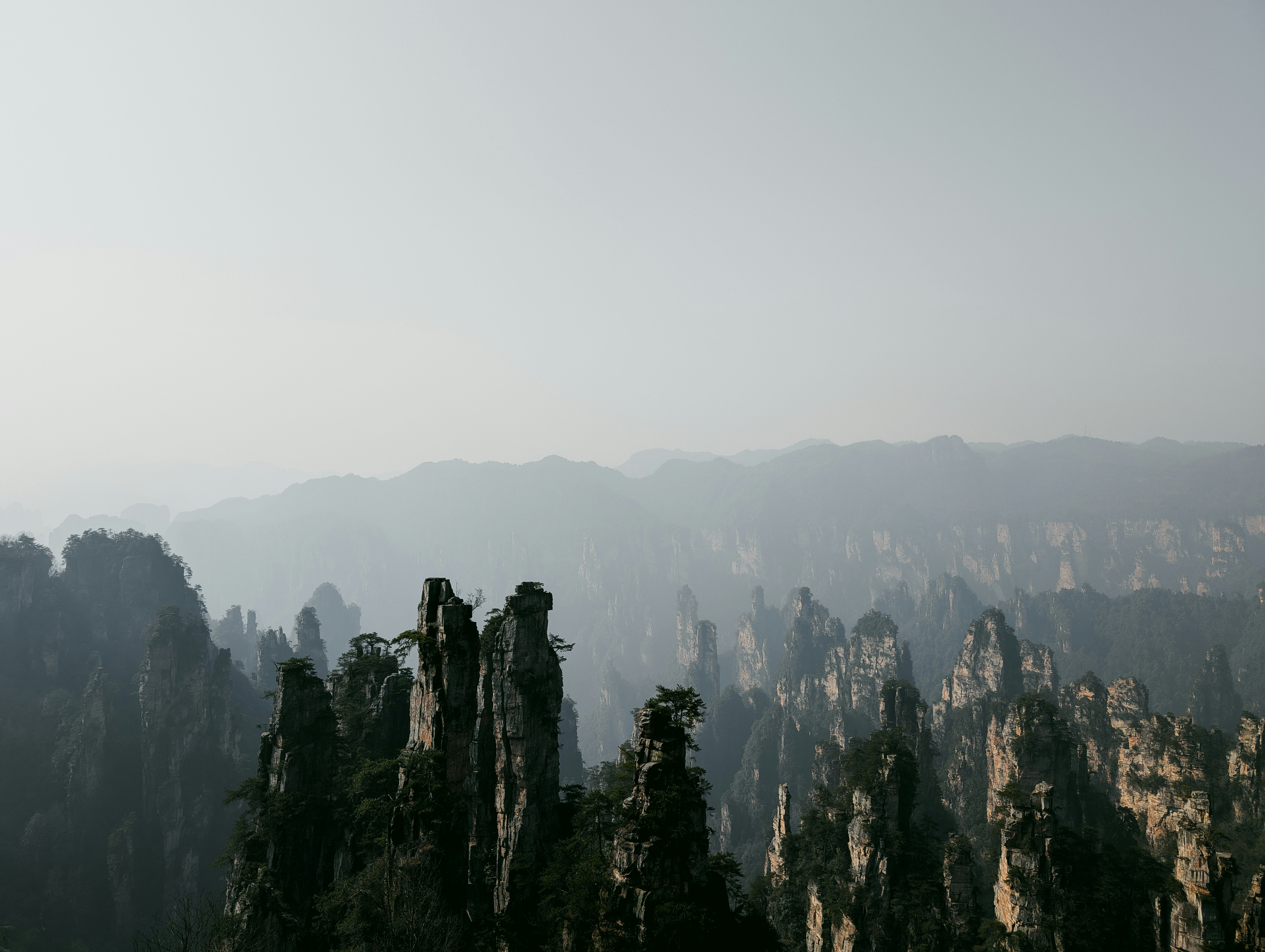
The crown jewel of Enshi's tourism offerings, the Enshi Grand Canyon stretches over 108 kilometers along the Qing River. The canyon features some of China's most dramatic karst scenery—sheer cliff faces rising hundreds of meters, isolated peaks resembling medieval castles, and the famous Qixing Pass (Seven Star Pass), a narrow corridor carved through the mountains.
The centerpiece of the park is Yunlong Ridge, a natural bridge spanning two cliffs—a geological marvel that offers vertigo-inducing views. Visitors can traverse the ridge on a glass-bottomed walkway suspended 300 meters above the canyon floor. The canyon also features the Bell Tower, a natural rock formation that produces a resonant tone when struck.
The area is divided into three main sections: the scenic area near the entrance, the Qianling Mountain area with its cable car system, and the remote Yunlong Ridge area. Allow at least 6-7 hours to properly explore the main attractions.
Tenglong Cave
Discovered in 1985, Tenglong Cave (腾龙洞) is one of China's largest karst cave systems, ranking among the top seven longest caves in the world. The main cavern stretches for approximately 59.8 kilometers, with individual chambers reaching heights of 74 meters and widths of 64 meters.
The cave system features an underground river that visitors can explore by boat during the dry season. Modern lighting highlights the extraordinary formations—stalactites, stalagmites, flowstone cascades, and columns that have formed over millions of years. The cave maintains a constant temperature of around 14°C (57°F) year-round, making it a comfortable destination in both summer and winter.
A highlight of any visit is the laser show performed in one of the cavern's vast chambers, where local Tujia cultural performances are also staged.
Fairy Mountain
Known in Chinese as Fengman Mountain (凤山), Fairy Mountain rises dramatically from the Enshi valley floor. The mountain is named for its resemblance to a phoenix spreading its wings, and the summit offers panoramic views over the city and surrounding karst landscape.
The mountain features a network of hiking trails, ancient temples, and pavilions. The Cloud Sea (云海) that frequently envelopes the peaks creates ethereal scenes particularly popular with photographers. A cable car provides access to higher elevations for those preferring to avoid the steep climb.
The mountain is especially beautiful during the Enshi Yulu tea-picking season in early spring, when the misty slopes are dotted with workers harvesting the famous local tea leaves.
Tujia Daughter City
Located on the banks of the Qing River, Tujia Daughter City (土家女儿城) is a purpose-built cultural complex that showcases the traditions of the Tujia people. The city was constructed using traditional Tujia architectural techniques, with wooden houses, flying eaves, and intricate carvings.
The complex includes museums, craft workshops, performance venues, and restaurants serving traditional cuisine. Daughter City refers to a Tujia tradition where young women prove their worth through skills in weaving, embroidery, and hospitality—visitors can observe demonstrations of these traditional crafts.
Evening brings the area to life with cultural performances featuring Tujia dancing, singing, and the famous "fire pot" dancing where performers dance over burning coals. The night market offers opportunities to purchase local handicrafts, textiles, and souvenirs.
Piao Valley
Piao Valley (坪坝营) is a lesser-known but spectacular area of colorful karst formations. The valley features ancient trees, waterfalls, and rock formations that take on different hues depending on the light and season.
The area is particularly popular for its autumn colors when the surrounding forests turn brilliant shades of red, orange, and gold. Hiking trails lead through the valley to viewpoints overlooking the dramatic landscape. The relative remoteness of Piao Valley means fewer crowds compared to the more famous attractions.
Local Food
| Dish | Chinese | Description | Where to Try |
|---|---|---|---|
| Roasted Potatoes | 炕土豆 (Kàng Tǔdòu) | Small potatoes roasted until crispy outside and fluffy inside, often seasoned with chili and herbs | Street vendors, local restaurants |
| Enshi Fried Noodles | 恩施炒面 (Ēnshī Chǎomiàn) | Stir-fried wheat noodles with vegetables, meat, and Enshi's signature spicy seasoning | Morning markets, noodle shops |
| Tujia Spicy Chicken | 土家辣子鸡 (Tǔjiā Làzǐ Jī) | Chicken wok-fried with dried chili, Sichuan peppercorns, and local herbs | Tujia Daughter City, rural restaurants |
| Sour Radish | 酸萝卜 (Suān Luóbo) | Pickled radish with a sweet-sour crunch, served as a side dish or snack | Street stalls, home cooking |
| Lotus Leaf Rice | 荷叶饭 (Héyè Fàn) | Rice steamed in fresh lotus leaves with meat, mushrooms, and seasonings | Traditional restaurants |
Culinary Highlights
Enshi's cuisine reflects its geographic position at the crossroads of central and southwestern China. The local food combines the spicy flavors of Sichuan and Hunan provinces with the unique traditions of the Tujia and Miao peoples.
Enshi fried noodles are the region's most iconic dish—a hearty breakfast staple found at every morning market. The noodles are hand-pulled and stir-fried with cabbage, carrots, pork, and a distinctive chili oil that gives the dish its characteristic red color and numbing heat.
The Tujia spicy chicken showcases the local preference for dried chili and Sichuan peppercorns, creating a dish that is simultaneously spicy, numbing, and aromatic. The chicken is typically cut into small pieces and fried until the exterior is crispy, then tossed with the spice mixture.
No meal is complete without Enshi Yulu tea, a famous green tea grown in the misty mountains surrounding the city. The tea is known for its fresh, slightly sweet flavor and is served throughout the day in local teahouses.
Best Time to Visit
| Season | Months | Weather | Pros | Cons |
|---|---|---|---|---|
| Spring | March-May | Mild (15-25°C / 59-77°F), occasional rain | Tea picking season, blooming flowers, comfortable hiking | Unpredictable weather, crowded holidays |
| Summer | June-August | Warm to hot (25-35°C / 77-95°F), frequent rain | Lush green landscapes, cave visits (cool inside), festival season | Heat and humidity, potential flooding |
| Autumn | September-November | Mild and dry (15-28°C / 59-82°F) | Best visibility, autumn colors, comfortable temperatures | October National Holiday crowds |
| Winter | December-February | Cold (3-12°C / 37-54°C), occasional snow | Quiet attractions, unique scenery, lower prices | Short daylight, some attractions closed |
Peak Seasons
The National Day holiday (October 1-7) and Chinese New Year are the busiest periods, with significantly increased accommodation prices and attraction crowds. For the best experience, plan your visit for mid-week during the shoulder seasons of spring (April-May) or autumn (September-October).
Getting There
By Air
Enshi Phoenix Airport (恩施许家坪机场) opened in 2019 and offers direct flights to major Chinese cities including Beijing, Shanghai, Guangzhou, Shenzhen, Chengdu, and Wuhan. The airport is located approximately 4 kilometers from the city center, with taxis and airport buses readily available.
By Train
The Enshi Railway Station (恩施站) is a major stop on the Shanghai-Wuhan-Chengdu high-speed rail line. Direct high-speed trains connect Enshi to:
- Wuhan: 2.5-3 hours
- Chongqing: 2-2.5 hours
- Yichang: 1.5 hours
- Jingzhou: 1 hour
Regular (non-high-speed) trains also serve the station, offering more economical options for budget travelers.
By Bus
Long-distance bus services connect Enshi to neighboring cities and provinces. Bus stations include:
- Enshi Bus Station (恩施客运站): Main station for inter-city routes
- Enshi South Bus Station (恩施南站): Services to southern Hubei and nearby attractions
Bus travel is slower than rail but offers flexibility for reaching specific attractions not serviced by trains.
Getting Around
Local Buses
Enshi's public bus system covers the city and surrounding areas. Routes to major attractions include:
- Bus 10: To Enshi Grand Canyon
- Bus 22: To Tujia Daughter City
- Bus 6: To Fairy Mountain
Fares are typically 2-3 RMB per ride. Bus schedules are less reliable outside main routes.
Taxis and Ride-Hailing
Taxis are abundant in the city center and at major transportation hubs. Didi (China's dominant ride-hailing service) is widely available and affordable:
- City center rides: 10-20 RMB
- To Enshi Grand Canyon: 80-120 RMB
- To Tenglong Cave: 60-100 RMB
Tourist Shuttle Buses
During peak season, special tourist shuttle buses connect major attractions. These depart from the Enshi Tourism Center (恩施旅游集散中心) near the railway station and offer a convenient (though slower) way to reach the grand canyon and other sites.
Self-Driving
Renting a car provides the most flexibility for exploring Enshi's scattered attractions. Major car rental companies operate at the airport and railway station. Road conditions are generally good, though mountain roads can be winding. An International Driving Permit (in addition to your home license) is required for foreign drivers.
Practical Tips
Money
- Cash is essential for small vendors, rural restaurants, and tips
- Alipay and WeChat Pay are widely accepted in hotels, restaurants, and shops
- ATMs are available throughout Enshi city and at major tourist sites
Communication
- Purchase a local SIM card at the airport or city center for reliable data
- WiFi is available in most hotels and restaurants
- Download offline maps of the area before heading to remote attractions
What to Pack
- Comfortable hiking shoes with good grip (essential for the canyon)
- Layers for variable mountain weather
- Rain gear regardless of season
- Sunscreen and hat for sunny days
- Scarf or light jacket for cave visits (constant 14°C / 57°F)
- Insect repellent for summer visits
Health & Safety
- Bring any prescription medications with documentation
- Enshi's medical facilities are adequate in the city but limited in rural areas
- Altitude sickness is not typically an issue, but the steep climbs can be strenuous
- Emergency number: 120 (ambulance), 110 (police)
Cultural Etiquette
- Remove shoes when entering homes and some traditional restaurants
- Accept offerings of tea graciously—refusing can be seen as impolite
- Ask permission before photographing local people, especially in ethnic villages
- Tipping is not customary but appreciated at upscale restaurants
Related Destinations
If you're planning to explore more of Hubei Province or the surrounding region, consider these nearby destinations:
| Destination | Distance from Enshi | Travel Time | Highlights |
|---|---|---|---|
| Wuhan | 500 km | 2.5 hours by train | Three Towns, Yellow Crane Tower, vibrant cuisine |
| Three Gorges | 200 km | 3 hours by bus | Yangtze River dam, scenic cruises |
| Shennongjia | 250 km | 4 hours by bus | Ancient forest, wildlife, UNESCO site |
| Chongqing | 300 km | 2.5 hours by train | Hotpot, night views, Dazu Rock Carvings |
| Wulingyuan (Zhangjiajie) | 150 km | 3 hours by bus | Avatar mountains, glass bridges, UNESCO site |
Enshi remains one of China's most underrated destinations—a place where dramatic natural landscapes meet living ethnic traditions. Whether you're hiking the rim of the grand canyon, exploring illuminated cave systems, or sharing a meal with a Tujia family, Enshi offers experiences that will stay with you long after you've left its misty mountains.