Chongqing Travel Guide
The Mountain City That Defies Logic
Perched dramatically where the Yangtze River meets the Jialing, Chongqing rises from the mist as China's most visually arresting metropolis. Home to over 30 million people in its greater metropolitan area, this fog-shrouded city on the edge of the Sichuan Basin captured the world's attention in 2024, becoming the undisputed viral sensation of Chinese travel content.
What makes Chongqing special isn't just its size—it's the sheer impossibility of its geography. Imagine a city built on seven hills, then add seven more, then connect them with highways that tunnel through mountains and bridge canyons. Buildings here have confusing numbers of floors. Streets appear on levels you didn't know existed. The metro system doesn't just go underground—it goes over buildings. Welcome to China's 8D city, where the phrase "I'm on the ground floor" means absolutely nothing.
Chongqing served as wartime capital during World War II, lending it a gravitas reflected in its colonial-era architecture and the Monument to People's Liberation. Today, it blends this historical depth with a futuristic skyline that lights up the Yangtze each night in spectacular fashion. The city has been called the "City of Fog" for good reason—it averages over 200 foggy days annually, creating an atmospheric, almost dreamlike quality, especially at dawn.
Whether you're here for the legendary hotpot, the architectural wonders, the river nightlife, or simply to experience a city that seems to exist in more dimensions than the rest of China, Chongqing delivers an unforgettable adventure.
Top Attractions
Hongyadong (洪崖洞)
The most photographed building in Chongqing—and possibly all of China—Hongyadong is a stilted complex of traditional wooden architecture clinging to a cliff face overlooking the Yangtze. The eleven-story structure appears to have grown organically from the rock, with its wooden beams and eaves illuminated dramatically at night, creating what looks like a scene from Avatar or a celestial palace descending from the heavens.
During the day, explore the interior shopping streets that recreate old Qingshi street scenes, complete with traditional teahouses and souvenir shops. At night, the building transforms into a glowing fantasy that has graced countless social media feeds. The best viewing spots are from the riverbank opposite or from the Jiangbeizui riverside park.
Insider Tip: For the iconic shot without crowds, arrive at 6:30 AM or visit during rainfall when the mist creates ethereal conditions.
- Admission: Free (individual shops may charge)
- Best Time: Evening for illumination; early morning for photos without crowds
- Getting There: Metro Line 1 or 6 to Xiaoshengmen Station
Yangtze River Night Cruise
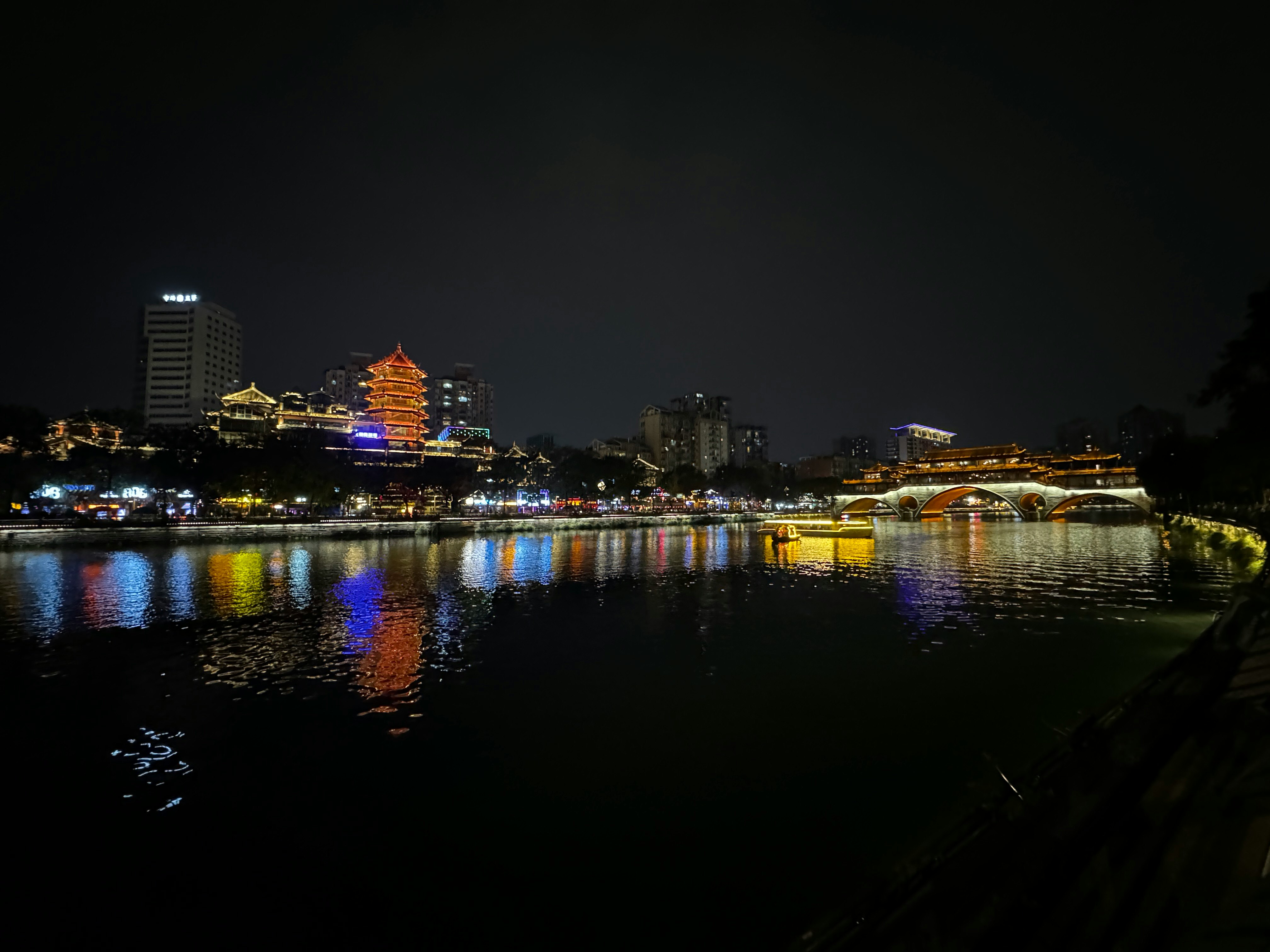
No visit to Chongqing is complete without experiencing the city from its lifeblood—the Yangtze. A night cruise departs from Chaotianmen Dock, offering unparalleled views of Chongqing's illuminated skyline. As darkness falls, thousands of buildings along both riverbanks light up, their reflections dancing on the water below.
The cruise typically lasts between 20 and 90 minutes, depending on the route chosen. Standard cruises pass under the iconic Chaotianmen Bridge and the historic Chaotianmen ancient city walls, while premium options extend further downstream toward the confluence with the Jialing River.
Insider Tip: Book tickets through official channels at the dock rather than through hotel concierge services to avoid inflated prices. The 8:30 PM departure offers the best balance of darkness and city illumination.
- Duration: 20-90 minutes
- Cost: ¥128-268 depending on vessel and route
- What to Bring: Camera with night mode; light jacket (river breezes are cool)
Jiefangbei CBD & Monument to People's Liberation
The commercial heart of Chongqing beats in Jiefangbei, the central business district that anchors the city's modern identity. Here, towering skyscrapers house luxury hotels, international brands, and some of the best viewpoints in the city.
At its center stands the Monument to People's Liberation (人民解放纪念碑), a 27.5-meter obelisk erected in 1947 to commemorate the city's liberation. This Art Deco-style monument has become a symbol of Chongqing and a popular meeting point. Surrounding it is a vibrant shopping district perfect for evening strolls.
- Admission: Free
- Getting There: Metro Line 1 or 2 to Jiefangbei Station
Eling Park (鹅岭公园)
For the best panoramic views of Chongqing's 8D terrain, head to Eling Park. This hillside park offers sweeping vistas across the cityscape, particularly striking at sunset when the fog lifts and the city's layers become visible in golden light. From here, you can see how the Yangtze and Jialing Rivers carve through the urban jungle, with skyscrapers seemingly stacked on top of each other as they climb the hillsides.
The park is free to enter and features traditional Chinese gardens, pavilions, and plenty of benches for soaking in the views. It's particularly popular with local elderly residents practicing tai chi in the early morning.
- Admission: Free
- Best Time: Sunset for dramatic lighting; clear mornings for visibility
- Getting There: Metro Line 1 to Eling Park Station, then a short walk uphill
Ciqikou Ancient Town (磁器口古镇)
Step back into Old Chongqing at Ciqikou, a Ming Dynasty-era town that has retained much of its traditional character despite the modern city growing up around it. Known historically for its porcelain production (ciqing means "green porcelain"), today the narrow stone streets are lined with teahouses, craft shops, and the irresistible aroma of street food.
Don't leave without trying Chen Mahua (陈麻花)—the crispy twisted dough snack that has made this town famous throughout Chongqing. Various flavors including sesame, pepper, and sweet are available, and vendors offer generous samples.
- Admission: Free (some individual attractions within charge small fees)
- Getting There: Metro Line 1 to Ciqikou Station
- Best Time: Weekday mornings to avoid crowds; all day for food
Wulong Karst (武隆喀斯特)
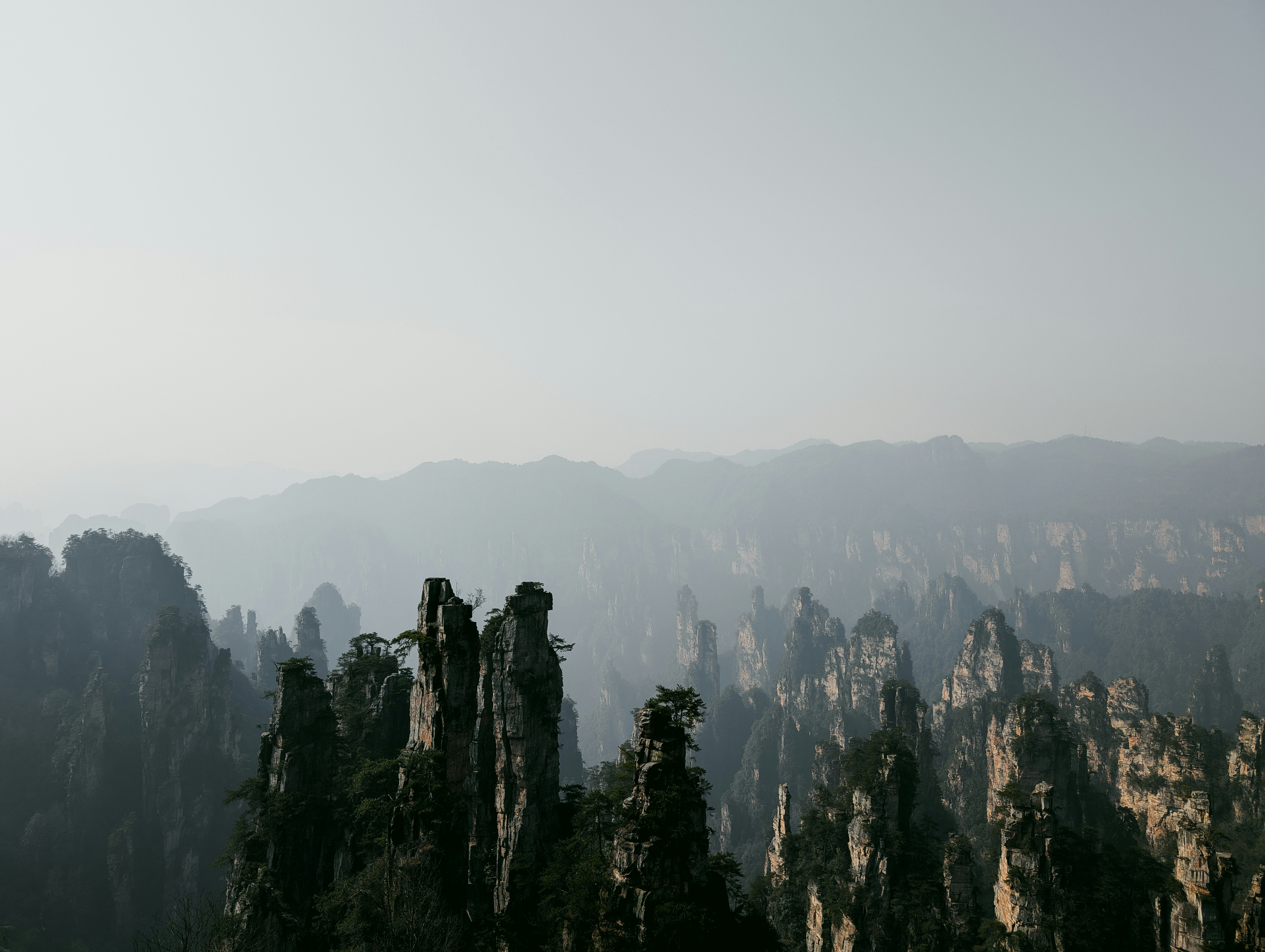
One of Chongqing's most spectacular natural wonders, the Wulong Karst represents some of China's most impressive limestone formations. As part of the larger Wulingyuan World Heritage site, this area features the famous Three Natural Bridges—massive natural arches spanning deep gorges—which gained international fame when they served as a filming location for Transformers: Age of Extinction.
The karst landscape includes underground caves, sinkholes, and the incredible Natural Bridge Scenic Area. A full day is recommended to fully explore the main attractions, including the Qutang Gorge section of the Three Gorges.
- Distance: 180 km from Chongqing (approximately 3-4 hours by road)
- Best Way to Visit: Day tour from Chongqing (¥200-300 including transport) or bus from Chongqing main bus station
- Notable: Three Natural Bridges, Furong Cave, Longshui Gorge
Local Food
Chongqing's cuisine is legendary throughout China, characterized by bold flavors, generous use of Sichuan peppercorns, and the signature "ma la" (numbing-spicy) sensation. Here's your essential guide to eating like a local:
| Dish | Description | Where to Try |
|---|---|---|
| Chongqing Hotpot (重庆火锅) | The city's signature dish featuring a divided pot with intensely spiced beef tallow broth, Sichuan peppercorns, and dried chilies. The central section is for organ meats (intestines, stomach), while the outer ring cooks vegetables and proteins. | Haidilao (chain), Tian Di (local favorite), small street-side establishments |
| Liangshan Chicken (梁山鸡) | A spicy braised chicken dish with taro, Sichuan peppercorns, and dried chilies. The chicken is slow-cooked until tender, absorbing the complex, numbing sauce. | Liangshan Chicken restaurants in Nanping District |
| Chen Mahua (陈麻花) | Crispy, twisted fried dough strips with various flavors—sesame, pepper, sweet. The famous snack from Ciqikou Ancient Town. | Ciqikou Old Street, numerous branches throughout the city |
| Boss Noodles (老板面) | Noodles topped with shredded chicken in a rich Sichuan sauce, featuring preserved vegetables and chili oil. A beloved local breakfast staple. | Street-side noodle shops near Jiefangbei; Boss Noodle flagship near Chaotianmen |
| Xiaolongxia (小龙虾) | Spicy crayfish boiled in Chongqing-style seasoning—finger-licking messy and absolutely delicious during summer months. | Shihuida Road food district; various seafood restaurants |
Best Time to Visit
| Season | Weather | Pros | Cons |
|---|---|---|---|
| Spring (March-May) | 15-25°C, occasional rain | Pleasant temperatures, azaleas in bloom, comfortable for sightseeing | Can be crowded during Qingming holiday; fog still present |
| Summer (June-August) | 28-38°C, hot and humid | Best for river activities, vibrant nightlife, crayfish season | Extreme heat can be exhausting; Yangtze flooding possible |
| Autumn (September-November) | 18-28°C, cooling | Best overall weather, clear skies, comfortable temperatures | Golden Week (October 1-7) brings massive domestic tourism |
| Winter (December-February) | 5-12°C, cold and foggy | Least crowded, atmospheric mist, hotpot season | Short daylight hours; fog can limit visibility for views |
Getting There
By Air
Chongqing Jiangbei International Airport (CKG) serves as a major hub with connections to most major Chinese cities and international destinations. Located about 30 minutes from the city center by metro (Line 3), the airport is well-connected to downtown.
- From Airport to City: Metro Line 3 to Lianglukou Station (connects to other lines); airport shuttle buses available
- Taxi/Uber: Approximately ¥50-70 to central areas
By High-Speed Rail
Chongqing's extensive high-speed rail network makes it easily accessible from neighboring cities:
| Destination | Travel Time | Frequency |
|---|---|---|
| Chengdu | ~1 hour | Every 15-30 minutes |
| Xi'an | ~4 hours | Multiple daily departures |
| Guiyang | ~2 hours | Regular service |
| Wuhan | ~5-6 hours | Multiple daily |
Main Stations: Chongqing North (major hub), Chongqing (downtown), Shapingba (near universities)
Getting Around
The Chongqing Metro
The Chongqing Metro is an engineering marvel, with lines that run underground, at street level, and elevated—sometimes all on the same journey. Currently operating 10+ lines, it's the most practical way to navigate the city. Note that some stations have dramatically different exit points depending on which level you enter from.
Tips:
- Download the "Chongqing Metro" app for real-time information
- Peak hours (7:30-9:30 AM, 5:30-7:30 PM) are extremely crowded
- Some stations have 10+ exits—note your exit number carefully
Taxis and Didi
Taxis are abundant and inexpensive in Chongqing, with base fares starting around ¥10. Didi (China's ride-hailing giant) is widely used and often cheaper during peak hours.
Important Note: GPS navigation in Chongqing is notoriously unreliable due to the 3D terrain. Drivers may take unexpected routes, and your map may show you "arrived" when you're actually on a road 50 meters above or below your destination. Trust your driver and maintain a sense of humor.
Practical Tips
Terrain and Walking
- Wear comfortable shoes with good grip. The city involves significant stair-climbing and uneven surfaces.坡
- Don't trust ground floor assumptions. A building's "first floor" might be accessible only from a street several levels above or below.
- Use the metro's escalators and elevators where available—they're essential for navigating elevation changes.
Food and Dining
- Start mild if you're new to Sichuan cuisine. Ask for "微微辣" (wei wei la)—the mildest spice level. The local "medium" can be overwhelming for uninitiated palates.
- Hotpot is a social experience. Expect long waits at popular restaurants during dinner hours. Many places offer号码牌 (queue numbering systems).
- Street food is safe and delicious. Follow the locals—if a stall has a queue, it's usually a good sign.
Weather and Atmosphere
- The fog creates atmosphere, not pollution. Chongqing's "fog" is actually mist from the rivers and is a natural phenomenon. However, it does reduce visibility for photography, especially in morning hours.
- Bring layers. Even summer evenings can be cool along the river. Winter requires warm clothing despite the relatively southern latitude.
- Summer heat is serious. Stay hydrated, seek air conditioning during midday, and protect from sun.
General
- Cash is still useful at smaller establishments, though WeChat Pay is ubiquitous.
- English is limited outside tourist areas. Learn a few basic Mandarin phrases or have a translation app ready.
- The Yangtze can smell during low water season (winter/spring)—this is normal and temporary.
Frequently Asked Questions
Why did Chongqing go viral in 2024?
Chongqing became a 2024 China travel sensation thanks to social media showcasing its otherworldly 8D terrain—buildings that appear to be on different levels depending on which angle you view them from, the dramatic Hongyadong stilted complex illuminated at night, and the city's unique fusion of futuristic skyline with traditional hilltop villages. The viral "Chongqing discriminator" trend highlighted how the city's topography confuses GPS and even locals, with stories of buildings with 20+ floors accessible only from certain streets.
How does Chongqing's hilly terrain affect the travel experience?
Chongqing sits at the confluence of the Yangtze and Jialing Rivers on a series of steep hills, creating a city where elevation changes of 100+ meters between streets are common. This means prepare for significant walking on stairs and steep pathways—comfortable shoes are essential. The terrain creates the famous 8D effect where a ground-floor entrance might lead to the 15th floor of another building. However, this also produces spectacular panoramic views and unique architectural marvels impossible to find in flat cities.
How is Chongqing hotpot different from other Chinese hotpot?
Chongqing hotpot distinguishes itself through its broth—a potent, numbingly spicy combination of beef tallow (not vegetable oil), generous Sichuan peppercorns creating the characteristic "ma la" (numbing-spicy) sensation, and dried chili peppers. The pot is traditionally divided into a central section for organ meats and a surrounding ring for vegetables and proteins. Unlike milder Cantonese hotpot, Chongqing version is intensely flavorful, often described as "seven numbing, three spicy."
How do I get to Wulong Karst from Chongqing?
Wulong Karst is approximately 180 kilometers (about 3-4 hours by road) from central Chongqing. The most common options are: booking a day tour through travel agencies (around ¥200-300 including transport and basic entrance), taking a bus from Chongqing's main bus station to Wulong County (roughly ¥60-80, 2.5 hours), or hiring a private car for more flexibility. The UNESCO World Heritage site features the famous Three Natural Bridges—massive natural arches that appeared in Transformers: Age of Extinction. Allow a full day for the visit.
Related Destinations
- Wulong Karst — UNESCO World Heritage site with Three Natural Bridges (180km, day trip)
- Three Gorges — Legendary Yangtze river cruise through Qutang, Wu, and Xiling gorges
- Chengdu — Just 1 hour by high-speed rail; gateway to pandas and Sichuan culture
- Dazu Rock Carvings — UNESCO World Heritage Buddhist sculptures, 90km from Chongqing
Chongqing isn't just a destination—it's an experience that challenges your perception of urban geography. Come hungry, wear comfortable shoes, and prepare to be thoroughly, delightfully disoriented.